
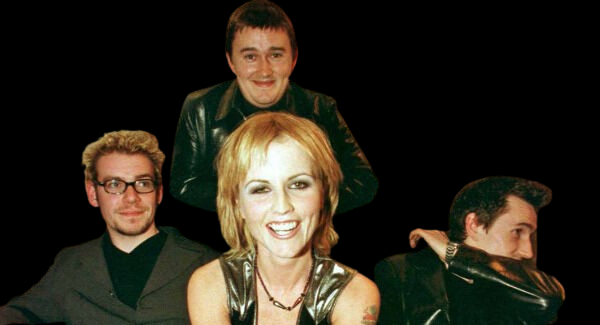

Dakota Rain Burton is a name that has been quietly making its way across the internet, drawing curiosity from music fans, celebrity followers, and people who simply stumbled upon the name while searching for something else. She is the youngest daughter of Dolores O’Riordan, the iconic lead singer of The Cranberries, one of the most beloved and influential rock bands to ever come out of Ireland. Dakota Rain Burton was born on April tenth, in the year two thousand and five, in Ireland, and she grew up in a world shaped entirely by music, love, and eventually, deep loss. Her father is Don Burton, a well-known Canadian music executive who also worked as a tour manager for the legendary British band Duran Duran. From the very beginning, Dakota Rain Burton was surrounded by a world that most people only ever experience through a screen — a world of musicians, tours, studios, and the quiet chaos that comes with living inside the music industry. Yet despite all of that, she has chosen a path that looks nothing like the one her famous mother walked. She stays private, stays quiet, and stays away from the public eye in a way that actually says a lot about who she is as a person and how she has chosen to handle a life that could have easily become a media circus. Most people who search for Dakota Rain Burton are looking for glamour, red carpets, and social media profiles, but what they find instead is something far more interesting — a young woman who simply chose herself over the spotlight, and who continues to carry her mother’s legacy in the most personal and quiet way possible.
The Family That Shaped Dakota Rain Burton
The family that Dakota Rain Burton was born into is one that carries enormous weight in the world of music and entertainment. Her mother, Dolores O’Riordan, was not just a singer — she was a cultural force, a voice that defined a generation, and an artist whose songs like Zombie and Linger became anthems for millions of people across the world. Growing up with that kind of mother means growing up with music in the walls, emotion in every conversation, and a deep understanding of what it means to feel things fully and express them honestly. Her father, Don Burton, brought his own world into the family home — decades of experience in the music industry, a sharp professional mind, and a background that connected the family to some of the biggest names in rock and pop. Dakota Rain Burton also grew up alongside two older siblings, Taylor Baxter Burton and Molly Leigh Burton, which means she was never alone in navigating the unique experience of being raised by a rock legend. She also has a half-brother named Donny Burton from her father’s previous relationship, making her part of a blended family that, by all accounts, was held together by genuine love and care. Her grandparents on her mother’s side, Eileen and Terence O’Riordan, are part of a large Irish family rooted in Limerick, a city known for its warmth, its music, and its fierce community spirit. Dakota Rain Burton did not choose the family she was born into, but everything about that family — the talent, the love, the loss, and the legacy — has shaped the person she is becoming, even if the world rarely gets to see it directly.
The World Dolores O’Riordan Left Behind
To understand Dakota Rain Burton, you first have to understand the world her mother created and the legacy she left behind when she passed away in January of two thousand and eighteen. Dolores O’Riordan was thirty-six years old when she died, and the loss hit the music world like a wave that no one was fully prepared for. She was the kind of artist who made you feel understood — her voice had a quality that was almost impossible to describe, a mix of raw power and fragile beauty that very few singers have ever managed to achieve. The Cranberries had been one of the defining bands of the nineteen nineties, and Dolores had continued making music, exploring new projects, and pouring herself into her art right up until her death. For Dakota Rain Burton, this loss was not a news headline or a social media moment — it was the loss of her mother, and she was only twelve years old when it happened. That kind of grief is not something you perform for an audience or process in public. It is something you carry quietly, day after day, learning slowly to live alongside it rather than trying to move past it. The music her mother made is still played every day around the world, which means Dakota Rain Burton lives in a reality where her mother’s voice is always somewhere nearby — in a café, on someone’s playlist, in a film score, in the background of a moment she did not ask to be part of. That is a unique and deeply complicated way to grieve, and it speaks to the resilience and quiet strength that many people who have observed the Burton family from a respectful distance have come to associate with Dakota Rain Burton herself.
A Childhood Shaped by Privacy and Love
Unlike many children of famous parents who grow up in front of cameras, Dakota Rain Burton experienced a childhood that was deliberately and carefully kept away from public attention. Her mother, Dolores O’Riordan, was famously protective of her children’s privacy, and she made no secret of the fact that she wanted her kids to have a normal life despite the extraordinary circumstances of their family. Dolores once spoke openly about the joy of being able to breastfeed Dakota without the rushed pressure of a touring schedule, a small but telling detail that reveals how much she treasured the quiet, ordinary moments of motherhood. Dakota Rain Burton grew up in Ireland, a country that has always had a strong sense of community and a deep respect for keeping certain things sacred and private. Irish culture, particularly in the smaller towns and communities where much of the O’Riordan family was rooted, has a way of protecting its own — of closing ranks around people who need space and not turning personal pain into public entertainment. This cultural backdrop almost certainly played a role in shaping how Dakota Rain Burton experienced her childhood and how she continues to approach her life today. She went to school, she had friendships, she experienced the ordinary rhythms of growing up — and all of that happened largely without cameras or reporters or social media followers watching her every move. That kind of childhood is actually quite rare for someone in her position, and it reflects the deliberate choices her parents made to give their children something real and grounded even when everything around them was anything but ordinary.
Don Burton and His Role in Dakota’s Life
Don Burton is a figure who often gets reduced to a footnote in stories about Dolores O’Riordan, but his role in the life of Dakota Rain Burton is far more significant than that. He is her father, and by all available accounts, he has been a steady and present force in her life even after the separation between him and Dolores that happened in two thousand and fourteen. Don Burton spent decades working in the music industry, first as an administrative officer and then as a tour manager for Duran Duran, one of the biggest bands of the nineteen eighties. He eventually met Dolores O’Riordan through his work in the industry, and the two married in nineteen ninety-four, going on to have three children together. The separation was handled quietly, without the kind of public drama that often accompanies the breakdown of a high-profile relationship, which says something important about both of them as people and as parents. Don Burton spent much of the children’s upbringing in Canada, maintaining a connection to his home country while also staying involved in the lives of his kids. For Dakota Rain Burton, having a father who understood the music industry but who also maintained a private and grounded life outside of it may have actually been one of the most stabilizing influences in her world. He represents a side of her story that is rarely discussed but deeply important — the practical, present, loving parent who helped hold things together during the most difficult years of a young life.
The Cranberries Legacy and What It Means for Dakota Rain Burton
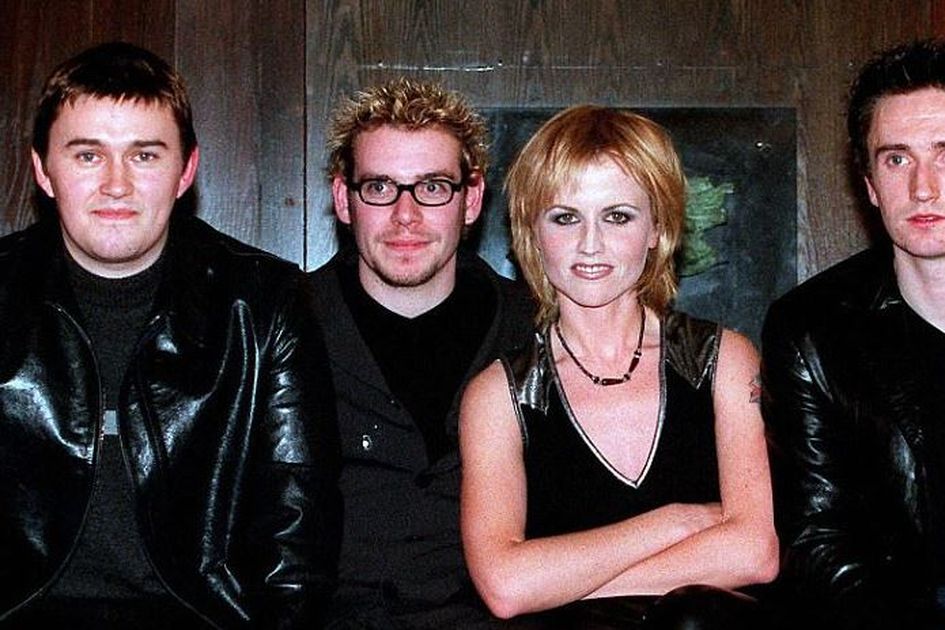
The Cranberries are one of those bands that transcend their era. Their music did not stay in the nineteen nineties — it traveled forward in time, finding new listeners in every generation and continuing to resonate in ways that very few bands ever manage to sustain. For Dakota Rain Burton, this means growing up in a world where her mother’s art is constantly being rediscovered, reinterpreted, and celebrated. Songs like Zombie, which Dolores wrote as a protest against violence and political conflict, have taken on new meanings in different parts of the world at different times, and the song continues to be covered, sampled, and discussed decades after it was first released. Linger is another song that has never stopped being relevant — its emotional honesty and musical simplicity give it a timeless quality that speaks to anyone who has ever loved someone and lost them. For Dakota Rain Burton, these songs are not just great music. They are her mother’s voice, her mother’s pain, her mother’s joy, and her mother’s way of reaching out to the world and saying something true. Living with that kind of artistic legacy means that grief and pride are always intertwined — every time someone discovers The Cranberries for the first time and falls in love with the music, Dakota Rain Burton is connected to that discovery in a way that is both beautiful and quietly heartbreaking. The legacy of The Cranberries is alive and growing, and Dakota Rain Burton is one of the living threads that connects that legacy to the present and the future.
Growing Up After Loss at a Young Age
Losing a parent at any age is one of the hardest things a person can go through, but losing a parent when you are twelve years old carries a particular weight that is difficult to fully put into words. Dakota Rain Burton was at an age where she was just beginning to develop her own identity, starting to understand the world in a more complex way, and beginning to form the kinds of relationships and experiences that shape a person for the rest of their life — and then her mother was gone. Grief at that age does not look the same as adult grief. It is layered with confusion, with a developing brain trying to process something it was never designed to process easily, and with the added complexity of knowing that the whole world is also grieving alongside you in a very public way. The death of Dolores O’Riordan made international news and prompted an outpouring of sadness and tribute from fans across every continent. For Dakota Rain Burton, all of that public mourning was happening at exactly the same time as her own deeply private and personal devastation. Navigating that kind of dual reality — public grief and private grief happening simultaneously — is something that requires a strength most twelve-year-olds should never have to find. That she has continued to live quietly and with apparent dignity in the years since speaks volumes about who she is and the kind of support system she has had around her during the most difficult chapter of her young life.
What Privacy Looks Like for a Celebrity Child
In an age where almost everyone has a social media presence and where sharing your life publicly has become almost an expectation, Dakota Rain Burton represents something genuinely different and increasingly rare. She has chosen not to participate in public life in any meaningful way. There are no verified social media accounts, no public appearances at events, no interviews, and no attempts to capitalize on her mother’s name or legacy for personal gain or public attention. This is a real and active choice, and it is one that deserves to be understood on its own terms rather than treated as something mysterious or suspicious. For many children of celebrities, the pull toward public life is enormous — there is money in it, there is attention in it, and there is a certain comfort in having the world already know your name before you have done anything to earn that recognition. Dakota Rain Burton has consistently resisted that pull, and the result is a life that remains genuinely hers, not a performance for an audience. Privacy is not the absence of a life — it is a different kind of life, one where experiences are felt fully because they are not being filtered through the lens of public presentation. Dakota Rain Burton seems to understand this in a way that many people twice her age never figure out, and that understanding is itself a kind of quiet wisdom that is worth recognizing and respecting.
Ireland and the Roots That Ground Dakota Rain Burton
Ireland is not just a place on a map for Dakota Rain Burton — it is the soil in which her identity is rooted. Her mother was born and raised in Limerick, a city in the midwest of Ireland with a fierce local pride and a deep musical tradition. The O’Riordan family is a large Irish Catholic family with strong community ties, and Dakota Rain Burton grew up connected to that world in ways that are difficult to fully appreciate from the outside. Irish culture places enormous value on family, on loyalty, on storytelling, and on the kind of emotional honesty that her mother channeled so powerfully into her music. Growing up in that environment means growing up with a sense of place and belonging that is deeply grounding, especially for someone navigating the kind of extraordinary circumstances that come with being the child of a global music icon. Ireland also has a cultural resistance to the kind of celebrity worship that dominates so much of American and British media culture — there is a tendency in Irish communities to be proud of someone without turning them into something they are not, and to extend the same protectiveness to their children and families. For Dakota Rain Burton, this cultural context has almost certainly been one of the things that made a quiet, private life feel not just possible but natural and right. She is Irish in a way that goes beyond passport and accent — she carries the values and the spirit of that culture in the way she has chosen to live her life.
The Siblings Who Share Dakota Rain Burton’s Story
Dakota Rain Burton did not face the loss of her mother alone. Her older brother Taylor Baxter Burton and her older sister Molly Leigh Burton went through the same devastating experience, and the three of them share a bond that is forged from both the extraordinary privilege and the profound pain of their shared history. Taylor Baxter Burton is the eldest, born in nineteen ninety-seven, which means he was already a young adult when Dolores died and had a different relationship with his mother’s public life and legacy than his younger sisters did. Molly Leigh Burton was born in two thousand and one, making her a teenager when the family lost Dolores, and like Dakota, she has maintained a private life in the years since. The three siblings also share a connection with their half-brother Donny Burton, who comes from their father’s previous relationship and adds another layer to the complex, blended family dynamic that Dakota Rain Burton has always known. Siblings who go through major loss together often develop a particular kind of closeness — a shared language of grief and memory that does not need to be spoken aloud because it is simply understood. For Dakota Rain Burton, having siblings who truly understand what she has been through, not just because they heard about it but because they lived it alongside her, is a resource and a comfort that most people in her position would never take for granted. The Burton siblings are a quiet unit, and their closeness is one of the things that makes the story of Dakota Rain Burton something more than just a celebrity biography.
The Internet’s Curiosity About Dakota Rain Burton
One of the more interesting things about Dakota Rain Burton is the way the internet has responded to her existence. She has done absolutely nothing to invite public attention, and yet searches for her name continue to grow, driven by a genuine curiosity that says something important about how people relate to the children of iconic artists. Part of the curiosity is straightforward — people who love The Cranberries and Dolores O’Riordan naturally want to know what happened to her family, how her children are doing, and whether her legacy is being carried forward in any visible way. That is a human impulse rooted in love and care, not in gossip or intrusion. But part of the internet’s interest in Dakota Rain Burton has also been fueled by the kind of low-quality content farms that fill the web with made-up biographies, fake net worth figures, and invented career histories for people who simply have not given the internet anything real to work with. There are articles claiming Dakota Rain Burton is an actress, others claiming she has a specific net worth, and others weaving elaborate stories about her personality and future ambitions — almost all of it invented, unverified, and frankly disrespectful to a private person who has never asked for any of this attention. The real story of Dakota Rain Burton is actually far more interesting than any of the fabricated versions, precisely because it is about the quiet dignity of someone who has refused to perform her life for an audience even when the audience very clearly wants a show.
How Loss Shapes Identity in Powerful Ways
There is a well-documented pattern in the lives of people who lose a parent during childhood — the loss becomes a defining thread in the fabric of who they become, not because it limits them but because it deepens them in ways that a life without such early loss rarely does. Dakota Rain Burton has grown up with an awareness of mortality, of the impermanence of life, and of the enormous capacity that human beings have for both love and grief, in a way that most people her age simply do not have. This kind of early encounter with loss can produce a certain seriousness, a certain depth of feeling, and a certain wisdom about what actually matters in life that is genuinely rare and genuinely valuable. It can also produce anxiety, sadness, and a complicated relationship with joy — because joy always carries within it the knowledge that it can be taken away. Dakota Rain Burton has navigated all of this without a public audience to perform for, without a therapist on camera explaining her journey, and without a publicist managing the narrative of her grief. She has done it privately, with her family, in the culture that raised her, and that is something that deserves real acknowledgment. The person she is becoming has been shaped by loss in ways that will probably never be fully visible to the outside world, but those shapes are real, and they matter, and they are part of what makes Dakota Rain Burton more than just a name attached to a famous mother.
What the Name Dakota Rain Burton Actually Represents
Names carry meaning, and the name Dakota Rain Burton is one that actually holds quite a bit of it when you look at it closely. The name Dakota comes from a Native American word that means friend or ally, and it carries connotations of connection, community, and strength. Rain is a name that suggests renewal, cleansing, and the kind of steady, life-giving force that does not announce itself dramatically but is absolutely essential to everything that grows. Burton is a surname with deep roots in British and Canadian history, connecting Dakota to her father’s lineage and to the long chain of family that stretches behind her. Together, the name Dakota Rain Burton creates a picture of someone who is rooted, connected, and quietly powerful — someone who does not need to make noise to have presence. The choice of that name by her parents says something about who Dolores and Don were as people and as parents — they were not interested in choosing a name that would look good on a marquee. They chose a name that felt like a person, like a life, like something real and grounded and full of meaning that goes beyond celebrity culture. Whether or not Dakota Rain Burton thinks about any of this when she hears her own name, the name itself is a kind of gift — a small piece of poetry that her parents gave her before she was even born, a signal of what they hoped for her and who they hoped she would become.
The Music World That Surrounded Her Earliest Years
Growing up in a household where music is not just something you listen to but something that pays the bills, shapes the schedule, and defines the emotional temperature of every day is a profoundly different experience from growing up in an ordinary home. Dakota Rain Burton’s earliest years were spent in a world where musicians, producers, managers, and creative professionals moved in and out of her life as naturally as neighbors do in a quiet suburb. Her mother was always creating, always performing, always feeling everything deeply and turning those feelings into songs that resonated with millions of people. Her father was always working behind the scenes, managing the logistics of that creative world with the kind of practical intelligence that makes artistic careers possible. For Dakota Rain Burton, music was not something she discovered — it was something she was born into, something she breathed alongside air from her very first moments. Whether or not she chooses to express herself through music in any formal way as she gets older, the musical foundation of her upbringing has almost certainly shaped how she hears the world, how she processes emotion, and how she understands the relationship between internal experience and external expression. That is a gift of a very specific and unusual kind, and it connects Dakota Rain Burton to her mother’s legacy in a way that goes much deeper than genetics or surname.
Respecting the Boundaries of a Private Life
One of the most important things that can be said about Dakota Rain Burton is something that the internet rarely says about private individuals who happen to be connected to famous people — and that is that her privacy deserves genuine respect, not just lip service. It is easy to write the words “she values her privacy” and then spend the next several paragraphs trying to dig up every possible detail about her life anyway. Real respect for a private person means accepting that there are limits to what the public is entitled to know, and that those limits are not a failure of information but a reflection of basic human dignity. Dakota Rain Burton has not done anything to invite public scrutiny. She has not released music, given interviews, created social media accounts, or made public appearances. She is a private individual who happens to have a famous mother, and that connection alone does not grant the public unlimited access to her life, her feelings, or her story. The curiosity that people feel about her is understandable — it comes from a place of love for her mother and genuine interest in her wellbeing — but that curiosity needs to be held alongside a firm commitment to not turning a real person into a public commodity. Dakota Rain Burton is not a character in someone else’s story. She is the author of her own, and she has chosen to write it privately, and that choice is one worth honoring fully and without qualification.
How Dolores O’Riordan’s Legacy Lives On Through Her Children
The legacy of Dolores O’Riordan is not stored only in streaming platforms and vinyl records — it lives in the people who loved her most, and chief among them are her children. Dakota Rain Burton, along with her siblings, represents the most human and irreplaceable continuation of everything her mother was. Dolores poured herself into her music, but she also poured herself into her family, and those two channels of love are not separate things — they are part of the same deep current of feeling that made her who she was. When people listen to The Cranberries today and feel something powerful move through them, part of what they are responding to is the same emotional honesty and depth that Dolores brought to every relationship in her life, including and especially her relationship with her children. Dakota Rain Burton carries that in her. Not necessarily in the form of music — she may never record a song or step onto a stage — but in the form of the values, the emotional intelligence, and the capacity for deep feeling that her mother modeled for her every single day of her childhood. Legacy is not always loud. Sometimes it is the quietest thing in the room — a way of looking at the world, a way of treating other people, a way of staying true to yourself even when everything around you is pulling in a different direction. That is the legacy that Dakota Rain Burton carries, and it is more than enough.
The Broader Conversation About Celebrity Children and Privacy
The story of Dakota Rain Burton sits within a much larger conversation that society is slowly and imperfectly beginning to have about the rights and wellbeing of children who are born into or connected to public figures. For a long time, celebrity culture treated the children of famous people as extensions of their parents’ public personas — fair game for the cameras, interesting to audiences, and valuable as human interest content regardless of whether those children had consented to any of it. The damage that this approach does to real young people is only beginning to be fully understood, and the conversation around it is long overdue. Dakota Rain Burton is an example of what it looks like when a family makes a different choice — when parents, and later the young person herself, decide that the right to a private life is non-negotiable and worth protecting even at the cost of public curiosity going unsatisfied. That choice has real costs in terms of public narrative and internet search results that fill with invented biographies instead of real information. But it has enormous benefits in terms of the actual lived experience of the person at the center of it all. Dakota Rain Burton has been able to grieve privately, grow privately, and develop her identity privately, away from the distorting mirror of public attention, and whatever kind of life she is building for herself, it is genuinely hers in a way that is increasingly rare for anyone connected to celebrity culture.

What the Future May Hold for Dakota Rain Burton
Nobody can say with certainty what path Dakota Rain Burton will choose as she moves further into adulthood and continues to build her own life on her own terms. She may choose to speak publicly about her mother at some point, adding her own voice to the already rich archive of memories and tributes that exists around Dolores O’Riordan. She may choose to pursue a creative path of her own, whether in music, writing, visual art, or some other form of expression that connects to the deep artistic tradition she was born into. She may choose to work entirely outside the public eye in a field that has nothing to do with music or entertainment, building a life that is defined by her own interests and values rather than by her family’s famous history. She may do all of these things at different points in her life, or none of them, or something else entirely that nobody is currently imagining. What seems clear, based on the choices she has made so far, is that whatever she does will be done thoughtfully and deliberately, on her own timeline and on her own terms. Dakota Rain Burton has already demonstrated, through the simple act of staying private in a world that rewards public performance, that she is someone with a strong sense of self and a clear understanding of what matters to her. That quality — that groundedness, that clarity — is the thing that makes her story genuinely interesting, not because of what she has done but because of who she appears to be.
Conclusion
At the end of everything that can responsibly be written about Dakota Rain Burton, the most honest and important thing to say is this — her life belongs to her. Not to her mother’s fans, not to the internet, not to the music industry, and not to anyone who feels entitled to know her story simply because they loved her mother’s music. She is a real person, navigating a genuinely extraordinary set of circumstances with what appears to be a quiet intelligence and a strong sense of personal values. She lost her mother young. She grew up in a family defined by extraordinary talent and genuine love. She was raised in a culture that taught her to value privacy and community over performance and exposure. And she has taken all of that and built a life that, from the outside, looks simple only because it is hidden — but which is almost certainly rich, complex, and deeply felt in ways that the public will probably never fully see. Dakota Rain Burton deserves to have her story told honestly, which means acknowledging both what is known and what is not, and resisting the temptation to fill the gaps with invention. She is the daughter of one of the most gifted musicians of her generation. She is a sister, a daughter, a private person, and a young woman still in the process of becoming whoever she is going to be. That is enough. That is actually quite a lot. And it is a story worth telling, even when — especially when — most of it remains quietly, deliberately, and rightfully untold.
FAQs
Who is Dakota Rain Burton? She is the youngest daughter of Dolores O’Riordan, the lead singer of The Cranberries, and Don Burton, a Canadian music executive.
When was Dakota Rain Burton born? She was born on April tenth, two thousand and five, in Ireland.
Does Dakota Rain Burton have social media? No, she does not maintain any public or verified social media presence and lives a private life away from public attention.
What happened to Dakota Rain Burton’s mother? Her mother, Dolores O’Riordan, passed away in January two thousand and eighteen at the age of forty-six, when Dakota was just twelve years old.
Does Dakota Rain Burton pursue music like her mother? There is no public information suggesting she has pursued music professionally, and she has kept all details of her personal and professional life entirely private.
Read also: Affdermoldtown Your Ultimate Guide To Digital Identity