
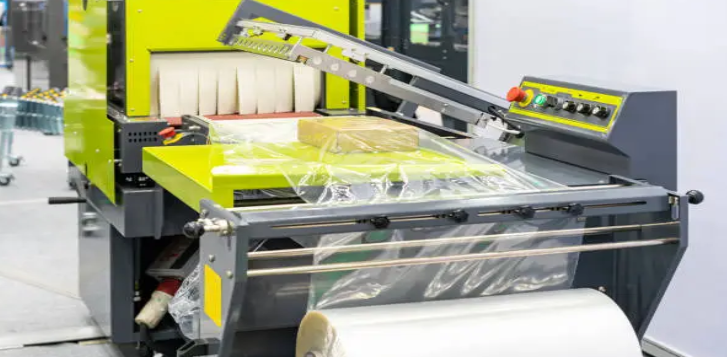

The Financial and Ecological Cost of Substrate Waste in Converting Lines
Root Causes of Web Breaks and Trim Loss in Plastic Film Processing
In high-speed flexible packaging lines, mechanical stress during Web Handling is a primary driver of substrate waste. The industry-wide shift toward Downgauged Films and paper-plastic laminates has dramatically narrowed the mechanical tolerance window for converting machinery.
- Tension Instability: Sudden fluctuations in nip-roller synchronization cause localized stretching, leading to irreversible web deformation or complete tensile breakages.
- Registration Drift: Inconsistent substrate elasticity triggers cumulative print-to-print misalignment, forcing operators to discard meters of film during acceleration and deceleration phases.
- Slitting and Cutting Wear: Degradation of rotary slitting knives creates jagged edges and excessive micro-dust, accelerating Trim Loss and weakening seal integrity downstream.
Quantifying Yield Losses: The Direct Impact on Gross Margin and Sustainability Metrics
Material waste in film converting directly erodes operational profitability, as polymer substrates represent up to 70% of total flexible packaging production costs. Even a 2% variance in Scrap Rate can eliminate net margins for medium-to-large converters running continuous multi-shift schedules.
- Gross Margin Compression: Setup scrap, edge-trim waste, and splicing losses directly inflate per-unit bill-of-materials (BOM) costs without adding marketable volume.
- Regulatory Penalty Exposure: Under tightening European carbon accounting frameworks, landfilling or incinerating manufacturing scrap introduces severe compliance penalties.
- OEE Degradation: Every web break halts production, reducing Overall Equipment Effectiveness (OEE) and consuming energy resources without yield output.
Mechanical Calibration for Thin-Gauge and Recyclable Films
Advanced Tension Control and Automatic Web Guiding Systems
Maintaining structural yield across sustainable, thin-gauge plastic films requires highly responsive mechanical calibration to prevent web deformation and substrate breaks. Industrial packaging engineers rely on precision web-guiding and Closed-Loop Tension Control systems to maintain dimensional stability during high-speed printing and converting. According to equipment specifications from KETE Group, deploying synchronized Electronic Line Shaft (ELS) mechanisms in rotogravure and pouch-making machines reduces mechanical backlash, directly cutting startup film scrap and stabilizing web tension across multilayer and monomaterial runs.
- Load-Cell Feedback: Real-time load cells measure micro-changes in web tension, automatically adjusting brake torque and servo-drive speeds within milliseconds.
- Ultrasonic Edge Guiding: Non-contact ultrasonic sensors detect the lateral position of transparent or reflective mono-material films without physical surface abrasion.
- Tension Profiling: Tapered tension algorithms prevent telescoping and core crushing during the rewinding of Biaxially Oriented Polypropylene (BOPP) and Polyethylene (PE) films.
Temperature Uniformity in Inline Bag and Pouch Making Machineries
Transitioning from traditional multi-material laminates to recyclable mono-material structures introduces severe thermal challenges during Heat Sealing. Polyolefin-based substrates exhibit a notoriously narrow sealing window, where minor temperature spikes cause film burn-through.
- Thermal Jaw Mapping: Precision PID temperature controllers must maintain heat uniformity across sealing bars within a tolerance of ±1°C to prevent localized over-melting.
- Pneumatic Dwell Calibration: Actuators must synchronize mechanical sealing pressure with linear web speed to ensure hermetic pouch seals without thinning the substrate barrier.
- Cooling Integration: Active chill-plate integration immediately downstream of the heating jaws sets the molten polymer chains, preventing seal wrinkling and deformation.
Troubleshooting Defect Analysis in Film Converting
| Visual / Mechanical Defect | Primary Mechanical Root Cause | Targeted Automation Solution | Estimated Material Scrap Reduction |
| Delamination | Insufficient adhesive coat weight or inaccurate drying tunnel airflow. | Automatic coat-weight monitoring and closed-loop temperature control. | 1.5% – 3.0% |
| Seal Wrinkling | Uneven jaw pressure distribution or excessive thermal dwell time. | Precision PID temperature tuning and self-aligning pneumatic actuators. | 2.0% – 4.5% |
| Register Drift | Tension surges during splice execution or fluctuating web modulus. | Dynamic ELS synchronization and tension-taper optimization. | 3.0% – 5.0% |
| Web Bagging | Non-uniform film caliper across the transverse direction (TD). | Automated segmented roller adjustments and infrared edge-guiding calibration. | 1.0% – 2.5% |
Flexo vs. Rotogravure: Mitigating Ink and Film Loss During Changeovers
Minimizing Registration Scrap with Automated Register Controllers
Job changeovers in flexographic and rotogravure presses historically account for the highest concentration of substrate scrap. Legacy mechanical lineshafts suffer from torsional deflection, requiring significant web lengths to synchronize color decks.
- Digital Mark Detection: High-speed optical matrix cameras track micro-register marks, continuously calculating spatial deviations across every print cylinder.
- Zero-Waste Preset: Automated cylinder pre-positioning aligns print sleeves electronically before ink touches the substrate, minimizing startup waste.
- Ramp-Speed Stability: Independent servo drives maintain tight register tolerances across the entire Acceleration/Deceleration profile of the press.
To explore further strategies on reducing overall production footprint and enhancing process reliability, reference current technical methodologies in Industrial Engineering Optimization.
Eco-Friendly Solvent Recovery and Water-Based Ink Adaptability
The industry-wide migration toward water-based inks and low-VOC (Volatile Organic Compound) solvent formulations requires re-engineering drying and ink-delivery infrastructure. Improper drying kinetics lead to solvent retention, odor entrapment, and substrate blocking in the rewound roll.
- Nozzle Airflow Geometry: Optimized impingement drying nozzles maximize convective heat transfer without subjecting heat-sensitive films to excessive thermal loads.
- LEL Monitoring: Integrated Lower Explosive Limit (LEL) sensors automatically recirculate heated air within the drying hoods, slashing energy consumption.
- Viscosity Automation: Automated viscosity controllers regulate solvent or amine additions in real time, preventing color shifts and ink-misting defects.
Aligning Packaging Plant KPIs with Global ESG and Circular Economy Directives
Building an ISO-Compliant Zero-Waste Packaging Workflow
Modern converting facilities must integrate automated defect detection directly into the production workflow to eliminate downstream sorting and manual waste handling. Early detection prevents defective roll stock from being processed into pouches or laminates.
- Inline Inspection Systems: High-resolution line-scan cameras inspect 100% of the web width for gels, voids, insect inclusions, and print voids.
- Defect Mapping: Software maps the coordinates of out-of-spec sections on the roll, allowing downstream slitter-rewinders to excise scrap automatically.
- Closed-Loop Quality Protocols: Integrating scrap data with MES (Manufacturing Execution Systems) enables root-cause traceability for ISO 9001 and ISO 14001 compliance.
For additional insights into structuring plant operations around ecological accountability, review standard frameworks for Sustainable Packaging and ESG in Manufacturing.
Meeting International Carbon and Circular Packaging Benchmarks
As industrial packaging operators optimize converting machinery for higher mechanical yields, these floor-level engineering improvements directly support global environmental compliance. Upgrading to systems that handle recycle-ready laminates without thermal burn-through or adhesive delamination ensures that facilities can meet stringent sustainability targets, such as the macro-level industry guidelines set forth by The Ellen MacArthur Foundation’s Global Commitment to eradicate non-recyclable plastic packaging and mandate verified circular materials globally by 2030.
- PCR Film Integration: Modifying tension profiles and idler-roller surfaces to process Post-Consumer Recycled (PCR) films without inducing web breaks.
- Carbon Intensity Reduction: Decreasing material scrap ratios directly lowers the CO2 equivalent per square meter of finished packaging material.
- Design for Recycling (DfR): Engineering pouches and bags exclusively from mono-material polyolefins to ensure compatibility with standardized mechanical recycling streams.