

The Wilderness Gap: Why Leisure First Aid Kits Fail in Remote Terrain
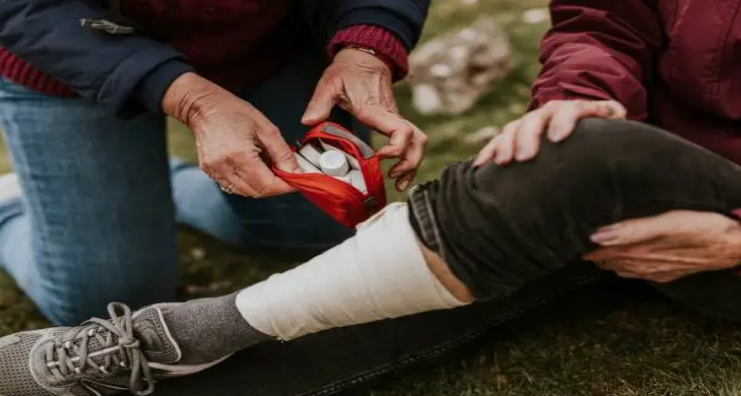
Most leisure first aid kits are designed for minor scrapes, blisters, and urban emergencies where definitive hospital care is just minutes away. In isolated wilderness terrain, however, these consumer-grade kits critically fail to address severe trauma such as arterial bleeding, limb fractures, or deep punctures.
When a hiker experiences a high-energy fall in a remote valley, survival depends on closing the wilderness gap before professional mountain rescue teams can arrive. This delay often extends past the golden period—the initial sixty-minute window where immediate hemorrhage control and airway management dramatically improve survival outcomes.
When operating hours away from cellular networks and vehicular access, reliance on adhesive bandages and low-absorbency gauze is a liability. A true wilderness medical kit must prioritize life-preserving interventions over basic hygiene, equipping the user to stabilize catastrophic injuries until an evacuation helicopter or search-and-rescue team reaches the GPS coordinates.
Standard Leisure First Aid Kit vs. Advanced Wilderness IFAK
| Comparison Dimension | Standard Leisure First Aid Kit | Advanced Wilderness IFAK (Individual First Aid Kit) |
| Primary Use Case | Minor surface abrasions, blisters, headaches, and minor burns. | Severe trauma, arterial hemorrhage, hypothermia prevention, and fractures. |
| Hemorrhage Capability | Minimal; low-absorbency gauze pads and adhesive bandages only. | High mechanical windlass tourniquets and hemostatic compression dressings. |
| Deployment Speed | Slow; requires unzipping internal compartments and sorting loose items. | Instant; one-handed quick-release mechanisms deployable in under two seconds. |
| Environmental Durability | Low nylon pouches with non-waterproof internal plastic sleeves. | High; abrasion-resistant Cordura, weather-proof seals, and MOLLE webbing. |
Core Anatomy of an Advanced Wilderness Trauma Kit (IFAK Standard)
When building a wilderness trauma system designed for survival hours away from cell reception, equipment consistency is non-negotiable. Modern outdoor protocols emphasize transitioning from household first aid items to professional-grade medical gear designed for severe hemorrhage and structural stability under wet, high-impact conditions.
Utilizing modular configurations such as outdoor trauma first aid kits engineered by specialists like Rhino Rescue ensures that critical intervention tools—including quick-release MOLLE systems and windlass tourniquets—remain deployable in under one second when fine motor skills deteriorate.
Hemorrhage Control: Tourniquets and Compression Bandages
Uncontrolled extremity bleeding is the leading cause of preventable mortality in backcountry trauma environments. Standard direct-pressure methods often prove insufficient for arterial bleeds, necessitating a true mechanical windlass tourniquet capable of exerting uniform circumferential pressure around an injured limb.
- Windlass Mechanics: Quality tourniquets must generate at least 1,000 kPa tightening pressure to completely occlude arterial blood flow without structural failure of the polymer or aluminum rod.
- Emergency Bandages: Incorporate wide-format elastic compression dressings featuring integrated pressure bars to focus mechanical force directly onto deep tissue wounds.
- Hemostatic Gauze: Use kaolin- or chitosan-impregnated dressings to accelerate rapid clotting in junctional areas where standard tourniquets cannot be applied safely.
Modular MOLLE Design and Quick-Release Systems
In freezing conditions or high-stress emergency scenarios, adrenaline and cold temperatures rapidly degrade fine motor control. An advanced trauma kit must be externally accessible without forcing the rescuer to dig through a fully packed 65-liter expedition rucksack.
- External Mounting: Utilizing MOLLE webbing allows the medical pouch to attach securely to the exterior hip belt or shoulder strap of an expedition pack.
- One-Handed Quick-Release: A pull-tab or tear-away Velcro panel enables the user to detach the entire medical kit instantly with one hand, even while immobilized.
- Spatial Layout: Internal clamshell organization ensures every intervention tool occupies a standardized, highly visible retention loop for immediate deployment.
Thermal Management and Airway Adjuncts
Trauma patients who lose significant blood volume rapidly lose their ability to thermoregulate, making them highly susceptible to clinical hypothermia even in mild summer temperatures. Preventing the lethal triad of trauma—hypothermia, acidosis, and coagulopathy—requires aggressive thermal preservation immediately following bleeding control.
- Reflective Thermal Blankets: Heavy-duty Mylar emergency blankets reflect up to 90% of radiated body heat, shielding the casualty from convective heat loss on cold ground.
- Nasopharyngeal Airway (NPA): An NPA provides a flexible, secure airway passage for unconscious or semi-conscious patients without triggering a gag reflex.
- Chest Seals: Compact vented chest seals prevent tension pneumothorax by allowing trapped air and blood to escape penetrating chest injuries while blocking external air ingress.
Essential Wilderness Emergency Communication and Evacuation Protocol
Once catastrophic hemorrhage is controlled and the casualty is insulated against cold soil, the next critical phase is initiating a coordinated rescue. In true wilderness environments without GSM network coverage, dedicated satellite communication devices become the sole lifeline to emergency dispatchers.
- GPS SOS Beacons: Activate an interactive SOS beacon to transmit exact coordinates and maintain two-way messaging with regional search and rescue (SAR) coordinators.
- MIST Handover Protocol: Structure your emergency message using MIST (Mechanism of injury, Injuries found, Signs/vitals, Treatment given) to prioritize helicopter dispatch.
- High-Visibility Markers: Display bright visual signaling panels or strobes around the casualty site to guide approaching aerial or foot-based rescue teams through dense terrain.
- Trail Selection & Safety: Whenever planning expeditions across challenging topography, consulting detailed UK Hiking & Wild Camping Guides can help you identify established evacuation access routes in advance.
Key Takeaways
| Area | Key Takeaway | Impact/Data |
| Hemorrhage | Mandate mechanical windlass tourniquets and hemostatic gauze | Must generate 1,000 kPa pressure |
| Deployment | Mount exterior MOLLE quick-release systems | Enables <2 second one-handed access |
| Hypothermia | Deploy heavy-duty Mylar thermal blankets immediately | Reflects 90% of body heat |
| Evacuation | Equip satellite SOS beacons; use MIST protocol | Bridges 60+ minute rescue gap |
| Maintenance | Audit chemical gels and polymers seasonally | Prevents UV/temperature gear failure |
Pre-Trip Gear Verification Checklist and Maintenance
Even with elite tactical gear packed efficiently in your rucksack, equipment is only as effective as the responder’s adherence to clinical protocol. Before heading into isolated wilderness trails, adventurers should periodically cross-reference their personal triage steps with national clinical guidance, such as the NHS emergency severe bleeding protocols, to ensure they are trained to apply sustained pressure and tourniquet interventions correctly without hesitation.
- Check Environmental Expiry: Audit chest seal gels and hemostatic dressings seasonally, as extreme temperature swings can degrade chemical adhesives and clotting agents.
- Inspect Polymer Integrity: Regularly examine tourniquet straps and buckles for UV degradation or micro-fissures caused by prolonged outdoor exposure.
- Verify Seal Packaging: Ensure sterile dressings remain vacuum-sealed and free from pinhole leaks that could introduce moisture or wilderness contaminants.
- Refresh Practical Skillsets: Conduct hands-on drills while wearing winter gloves to build muscle memory for low-light or adverse weather emergencies, supplementing your preparation with expert Outdoor Adventure Gear & Travel Safety resources.