
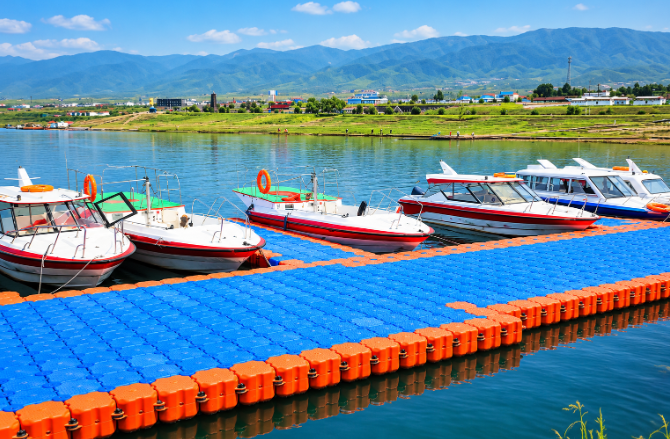

Modern waterfront developments face a complex convergence of environmental and structural challenges. Rising sea levels, severe tidal surges, accelerated saltwater corrosion, and stringent ecological permitting standards have exposed the vulnerabilities of traditional fixed coastal infrastructure. Rigid pilings and stationary decks struggle to withstand changing hydraulic forces, resulting in high lifetime maintenance and frequent operational downtime.
To navigate these challenges, marine engineers, marina operators, and resort developers are shifting from static, rigid installations to flexible, modular floating structures. These engineered polymer systems adapt continuously to water fluctuations, offering a durable, environmentally compliant foundation for modern waterfront development.
The Engineering Imperative: Fixed Piers vs. Floating Dock Systems
Choosing between fixed pier installations and floating infrastructure shapes long-term operational resilience, asset safety, and maintenance costs.
Adapting to Tidal Dynamics and Water Level Fluctuations
Fixed docks operate at a permanent elevation, creating severe functional limitations in regions subject to tidal ranges or seasonal water fluctuations.
- Constant Freeboard Alignment: Floating dock platforms adjust dynamically with water level changes, keeping the deck height consistent relative to the waterline.
- Elimination of Extreme Gangway Slopes: Maintaining a constant elevation relative to vessels prevents dangerous gangway angles and simplifies access for passengers and cargo.
- Reduction of Structural Fatigue: Fixed timber and concrete pilings absorb severe shear forces from wave actions during high tides, whereas floating systems dissipate energy across interconnected modular components.
Maintenance and Total Cost of Ownership (TCO)
Evaluating marine investments based solely on initial capital expenditure overlooks the compounding costs of material degradation in marine environments.
While traditional timber requires constant sealing and concrete suffers from saltwater-induced spalling, synthetic materials have redefined marine longevity. Modern waterfront engineering increasingly relies on modular polymer systems that completely eliminate rot and rust. According to technical specifications from specialized manufacturers of modular plastic floating dock systems, high-molecular-weight HDPE pontoons, such as those engineered by Hisea Dock, can deliver a service life up to 50 times longer than timber decking, while maintaining structural buoyancy without degrading into marine habitats.
- Zero Timber Decay or Steel Oxidation: High-grade polymers operate in hyper-saline conditions without rotting, splintering, or corroding.
- Reduced Inspection and Repair Lifecycles: Eliminating pressure-treating chemicals, structural re-sealing, and re-tubing drives down routine operating expenses.
- Preserved Asset Valuation: Polymer-based infrastructure maintains structural integrity and appearance over decades, lowering overall lifecycle costs.
Material Science at the Water’s Edge: Why High-Density Polyethylene (HDPE) Wins
Material selection determines how marine infrastructure withstands continuous physical and chemical stress along the shoreline.
Molecular Durability and UV Resistance
High Molecular Weight High-Density Polyethylene (HMWHDPE) is engineered specifically for punishing aquatic conditions.
- Chemical Inertness: HMWHDPE resists fuel spills, acid rain, motor oil, and marine organism biofouling without structural degradation.
- Advanced UV Stabilization: Integrated UV additives prevent material brittleness, color fading, and cracking caused by prolonged sunlight exposure.
- High Impact Tolerance: The flexible molecular structure absorbs heavy impact energy from vessel berthing and debris collision without fracturing.
Ecological Footprint and Regulatory Permitting
Environmental compliance is a central bottleneck for commercial waterfront projects, making material safety critical during planning approvals.
- Non-Toxic and Non-Leaching: Unlike creosote-treated wood or pressure-treated timber, HDPE releases no toxic heavy metals or synthetic chemicals into the water column.
- 100% Recyclable Polymer Structure: Modular blocks can be re-processed at the end of their operational lifecycle, supporting circular economy practices.
- Accelerated Environmental Permitting: Inert materials satisfy strict local and national regulatory criteria regarding sensitive aquatic ecosystems.
Structural Versatility in Commercial and Leisure Applications
Modular engineering allows facility managers to configure, expand, or reconfigure floating platforms based on shifting operational demands.
Drive-On Docking for Jet Skis and Watercraft
Commercial watercraft rental operations and private marinas require fast, safe berthing solutions that minimize hull wear.
- Specialized Drive-On Configurations: Integrated U-shaped and V-shaped entrance channels permit smooth drive-on docking and effortless launching.
- Dry-Hull Protection: Elevating personal watercraft (PWC) and small tenders entirely out of the water prevents marine growth, osmosis blistering, and hull fouling.
- Rollers and Guide Systems: Heavy-duty, low-friction rollers reduce wear on craft hulls while easing manual launching procedures.
Heavy-Duty Load Capacities and Interlocking Lugs
Modular floating cubes assemble into expansive structural configurations capable of supporting heavy commercial applications.
- High Load-Bearing Ratings: Multi-cell interior reinforcement allows modern HDPE floating platforms to support loads exceeding 350+ kg/m² safely.
- Interlocking Pin Lug Systems: Multi-directional connection lugs distribute point loads and surface tension evenly across the entire modular assembly.
- Scalable Commercial Infrastructure: Modular matrices support diverse applications, including floating restaurants, helipads, event spaces, and temporary pedestrian bridges.
Environmental Stewardship and Coastal Ecosystem Preservation
Sustainable coastal engineering requires minimizing physical disruption to marine environments during installation and ongoing use.
Low-Impact Anchoring and Benthic Protection
Conventional marine construction relies on extensive seabed dredging and invasive pile driving, which disrupts marine ecosystems.
- Flexible Tethering Systems: Elastic cable tethers and specialized deadweight anchors accommodate tidal movement without scouring adjacent sea beds.
- Preservation of Benthic Habitats: Non-invasive anchoring techniques protect critical seagrass beds, coral formations, and benthic organisms.
- Light-Transmitting Deck Geometries: Spaced modular designs allow natural sunlight to penetrate the water column, supporting photosynthesizing aquatic life beneath the platform.
Key Takeaways
| Area | Key Takeaway | Impact/Data |
| Material | Replace timber and concrete with high-density polyethylene | Up to 50x longer lifespan than timber |
| Performance | Accommodate water level changes dynamically | Eliminates structural fatigue and steep gangway angles |
| Capacity | Interlock modular blocks for heavy commercial loads | Supports over 350 kg/m² load capacity |
| Compliance | Deploy non-toxic polymers and non-invasive anchors | Preserves benthic habitats and accelerates permitting |
Conclusion: Future-Proofing Waterfront Investment
As coastal conditions become more volatile and environmental regulations tighten, traditional rigid waterfront structures face shorter operational lifespans and rising maintenance costs. Modular HDPE floating dock systems represent a shift toward resilient, sustainable, and adaptable marine infrastructure.
Mitigating environmental damage during coastal construction has become a strict requirement for planning permission across European and North American waters. As outlined in environmental policy updates from the U.S. Environmental Protection Agency, low-impact floating installations that avoid seabed dredging and chemical leaching significantly reduce ecological disruption to benthic ecosystems, aligning with global sustainable marine development mandates.
By integrating material science, modular flexibility, and low-impact anchoring, commercial developers and residential property owners can future-proof their marine assets while upholding environmental standards.