

Thomas Emil Sicks While searching for Kiefer Sutherland or reading about Shirley Douglas. He is not famous, has never tried to be, and has no social media, red carpet moments, or public interviews to his name. Yet his story connects directly to one of the most remarkable family legacies in Canadian history, touching politics, activism, Hollywood, and old business wealth all at once. That gap between his private life and his extraordinary family background is exactly what makes him worth knowing about.
What Thomas Emil Sicks Means in Simple Words
Thomas Emil Sicks is the eldest son of Shirley Douglas, the celebrated Canadian actress and civil rights activist, and the grandson of Tommy Douglas, the man who built Canada’s universal healthcare system. Through his mother’s second marriage to Donald Sutherland, he became the half-brother of Kiefer Sutherland and Rachel Sutherland. His father, Timothy Emil Sicks, came from a wealthy Seattle brewing family connected to the famous Sicks’ Rainier Brewing Company. What it means is simple — Thomas carries two very different worlds inside him, political fire on one side and business heritage on the other, and he chose to live quietly outside both.
Where the Sicks Family Name Comes From
The Sicks family built their name in the Pacific Northwest through the Sicks’ Rainier Brewing Company, once one of the largest breweries in Washington State. Timothy Emil Sicks, Thomas’s father, came directly from this business lineage, and his family was known across Seattle for brewing, sports ownership, and real estate ventures. When Shirley Douglas and Timothy married in 1957, two completely different worlds came together — one side fought loudly for social justice, and the other built businesses quietly and kept a low profile. Thomas grew up carrying both of those instincts, and that balance between public purpose and private life never really left him.
The Early Life That Shaped Thomas Emil Sicks
Thomas was born in the late 1950s, though his exact birth date has never been shared publicly, which already tells you something about the kind of man he is. His parents’ marriage was short-lived, and Shirley raised him mostly on her own in Canada after they separated. Growing up with Shirley Douglas as a mother meant living inside a household charged with ideas, political debate, creative energy, and deep moral conviction every single day. That kind of upbringing does not leave a person unchanged — it builds a strong internal compass, and Thomas clearly carried that compass with him for the rest of his life.
Who Shirley Douglas Was and Why She Mattered
Shirley Douglas was born on April 2, 1934, in Weyburn, Saskatchewan, and she carried her father Tommy Douglas’s fighting spirit through art and activism rather than formal politics. She built a respected career in film, television, and theatre, with roles in productions like Wind at My Back earning her serious recognition in Canadian entertainment. Beyond acting, she was arrested and deported from the United States in the 1960s because of her civil rights involvement, and she spent decades fighting for women’s equality, nuclear disarmament, and public healthcare. She passed away on April 5, 2020, three days after her 86th birthday, and for Thomas Emil Sicks, losing her meant losing the person who had shaped his entire understanding of what a life well lived actually looks like.
The Legacy of Grandfather Tommy Douglas
Tommy Douglas is not just a historical name in Canada — he is a national symbol voted by Canadians as the greatest Canadian of all time in a major public poll. He served as Premier of Saskatchewan, then became the first federal leader of the New Democratic Party, and his most enduring achievement was introducing Canada’s universal healthcare system. For Thomas Emil Sicks, Tommy was not a textbook figure but a grandfather whose values filled the household and set a standard that filtered through every generation of the family. Growing up in the shadow of that kind of legacy means that questions about purpose, fairness, and community responsibility were not abstract — they were simply part of daily life.
How Thomas Connects to Kiefer Sutherland
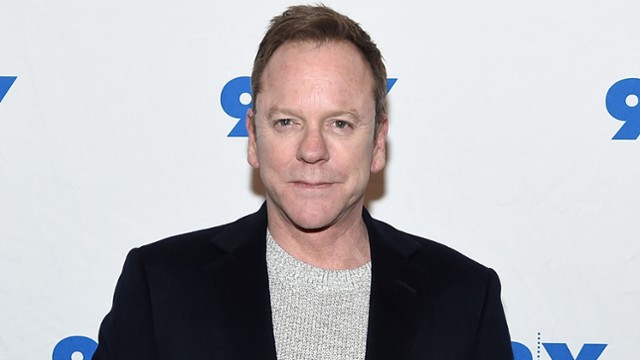
Kiefer Sutherland became globally famous through roles in 24 and Designated Survivor, making him one of the most recognizable actors of his generation. He is the son of Shirley Douglas and her second husband, actor Donald Sutherland, which makes him the half-brother of Thomas Emil Sicks — they share the same mother but have different fathers. Where Kiefer stepped fully into the spotlight and built a career on public visibility, Thomas moved quietly in the opposite direction. That contrast between two brothers raised by the same extraordinary woman says everything about how differently people can respond to the same powerful upbringing.
The Core Character of Thomas Emil Sicks
Thomas Emil Sicks has never given a public interview, holds no verified social media accounts, and has left almost no public footprint despite coming from one of Canada’s most talked-about families. What we do know about him points consistently toward a man who values community, hard work, and personal integrity over recognition or fame. He built his career around sports, business, and local philanthropy — areas where the work speaks for itself and the person behind it can stay in the background. In a world that constantly rewards visibility, Thomas Emil Sicks made the quiet, confident choice to simply do good work without asking anyone to notice.
The Career Path Thomas Emil Sicks Chose
Rather than chasing entertainment or politics, Thomas Emil Sicks built a career rooted in sports, business, and community service. He played baseball for the Regina Red Sox and later became the owner of the Calgary Buffaloes, showing a genuine passion for local sport and for giving young athletes a real platform. He also worked within the brewing industry through connections to Sicks’ Brewery, and he moved into hotel and construction businesses over time. Alongside all of that, he contributed to philanthropic work, donating to hospitals and schools and supporting community projects that most people would never trace back to him.
His Connection to the Douglas Political Tradition
Thomas Emil Sicks did not enter politics, but the political DNA of the Douglas family clearly shaped how he thinks and acts in the world. His grandfather Tommy Douglas believed that a society is measured by how it treats its most vulnerable people, and that belief ran through Shirley Douglas’s activism and filtered naturally into Thomas’s approach to philanthropy and community investment. What it means is that Thomas did not need a political title to carry forward his family’s values — he simply lived them through the work he chose and the causes he quietly supported. The Douglas tradition was never just about winning elections; it was about showing up for people, and Thomas did exactly that in his own private way.
What Makes Thomas Emil Sicks Different From His Famous Relatives
The most striking thing about Thomas Emil Sicks is not what he did but what he deliberately did not do. He did not trade on his mother’s name, his grandfather’s legend, or his half-brother’s Hollywood stardom to build a public profile. He had every tool available to step into the spotlight — famous family, respected heritage, strong values, and a story worth telling — and he consistently chose not to use any of them that way. That kind of restraint is genuinely rare, especially in a media culture that rewards family connections and legacy branding above almost everything else.
How His Father Timothy Emil Sicks Influenced Him
Timothy Emil Sicks brought a business-minded, entrepreneurial energy into Thomas’s heritage that balanced out the political and artistic fire from his mother’s side. The Sicks family of Seattle were builders in the traditional sense — they created companies, owned sports teams, and invested in their region’s economy without seeking political power or cultural celebrity. Timothy himself later pursued a professional career in psychiatry, adding yet another dimension to the family’s already wide range of influence. Thomas seems to have absorbed that quiet builder mentality from his father’s side — the idea that you can create real value in the world without needing anyone to applaud you for it.
Real-World Lessons From the Life of Thomas Emil Sicks
Imagine a young professional who grows up in a high-achieving family, surrounded by pressure to perform publicly and live up to a famous name. The easy path is to lean on that name, ride the recognition, and build a career on inherited visibility. Thomas Emil Sicks took the harder, more honest path — he built something real on his own terms, in industries that required actual work, and contributed to his community without broadcasting any of it. That is a lesson worth carrying into any field, any career, and any life: legacy is not something you inherit, it is something you build through consistent, quiet, purposeful action.
The Benefits of Living a Private Life in a Public Family
Living privately when your family is publicly celebrated comes with real psychological and personal benefits that most people overlook. Thomas Emil Sicks avoided the constant scrutiny, public judgment, and identity pressure that comes with being a recognizable name — things that visibly affected even strong public figures like Shirley Douglas throughout her career. By stepping back, Thomas gained the freedom to define himself on his own terms rather than being permanently defined by his mother’s activism or his grandfather’s political greatness. What it means practically is that he got to build a life that genuinely belonged to him, shaped by his own choices rather than by public expectations.

Applications of Thomas’s Story in Different Fields
The story of Thomas Emil Sicks applies meaningfully across several fields beyond entertainment and family history. In leadership studies, his example shows that effective community contribution does not require public visibility — local sports ownership, philanthropic giving, and quiet business building are all legitimate forms of leadership. In psychology, his life illustrates the value of identity autonomy — the ability to form a self-concept independent of powerful family narratives. In education, his story is a useful case study in how values transmitted through family culture can shape a person’s entire approach to work and civic responsibility, even without formal instruction or public platform.
Challenges Thomas Emil Sicks Likely Faced
Living privately in a famous family is not without its real challenges. Every major event in his mother’s life, his grandfather’s legacy, or his half-brother’s career became a public conversation that Thomas was connected to whether he wanted to be or not. Maintaining genuine anonymity in the internet age is genuinely difficult — curious people search, journalists dig, and the absence of information often generates more speculation than facts would. Thomas Emil Sicks has navigated all of that consistently, which suggests not just a preference for privacy but an active, deliberate commitment to protecting it across decades.
What the Future Holds for the Legacy of Thomas Emil Sicks
As interest in the Douglas-Sutherland family continues to grow — particularly with renewed attention to Tommy Douglas’s healthcare legacy in the context of global health debates — Thomas Emil Sicks will inevitably become a more discussed figure. Future biographers and documentary makers exploring Shirley Douglas’s life will naturally spend more time examining Thomas’s story as the eldest child who inherited her values most quietly. In an era where AI-driven research tools are making private individuals increasingly searchable and visible, maintaining the kind of anonymity Thomas has protected will become harder for anyone connected to a famous family. His story may ultimately become a reference point for conversations about digital privacy, legacy, and the right to define yourself outside your family’s public narrative.
How AI and Technology Are Changing Stories Like His
Here is the thing about living privately in the modern world — technology is making it significantly harder. AI tools can now aggregate scattered public records, family trees, news archives, and social connections to build surprisingly detailed profiles of people who have never sought public attention. For someone like Thomas Emil Sicks, who has carefully avoided the spotlight for decades, the rise of these tools creates a genuine tension between personal privacy and public curiosity. What it means going forward is that the concept of a truly private life will need to be actively defended rather than passively maintained, and the story of Thomas Emil Sicks is a quiet but powerful example of why that matters.
Why Thomas Emil Sicks Represents Something Bigger
Thomas Emil Sicks is not just a private man from a famous family — he represents a broader idea about how we measure a meaningful life. Society tends to equate significance with visibility, assuming that the people who matter most are the ones we can see, follow, and track. Thomas quietly challenges that assumption by building real community value, supporting real institutions, and living by real values without ever asking for recognition in return. His story is a reminder that significance and fame are not the same thing, and that some of the most important contributions a person can make happen entirely outside the frame of public attention.
Conclusion
The story of Thomas Emil Sicks is ultimately a story about choice. He was born with every advantage a person could want in terms of family legacy — political greatness, artistic fire, Hollywood connections, and business heritage all running through his blood at once. And he used all of that not to build a public career but to build a private life of genuine integrity, community contribution, and personal freedom. In a world that constantly pushes people to perform, promote, and be visible, Thomas Emil Sicks made the rare and quietly courageous choice to simply be useful, honest, and real. That is a legacy worth respecting, even if it is one most people will never fully see.
FAQs
Who is Thomas Emil Sicks? Thomas Emil Sicks is the eldest son of Canadian actress and activist Shirley Douglas and the grandson of Tommy Douglas, the founder of Canada’s universal healthcare system.
Who is Thomas Emil Sicks’s father? His father is Timothy Emil Sicks, a member of the Seattle-based Sicks family known for the Sicks’ Rainier Brewing Company, who later pursued a career in psychiatry.
Is Thomas Emil Sicks related to Kiefer Sutherland? Yes. Thomas is the half-brother of Kiefer Sutherland. They share the same mother, Shirley Douglas, but have different fathers.
Why is Thomas Emil Sicks so private? Thomas has never publicly explained his preference for privacy, but his entire life reflects a consistent and deliberate choice to stay away from media attention and public recognition.
What did Thomas Emil Sicks do professionally? He played baseball for the Regina Red Sox, owned the Calgary Buffaloes sports team, worked in brewing and construction, and contributed to local philanthropy including donations to hospitals and schools.