
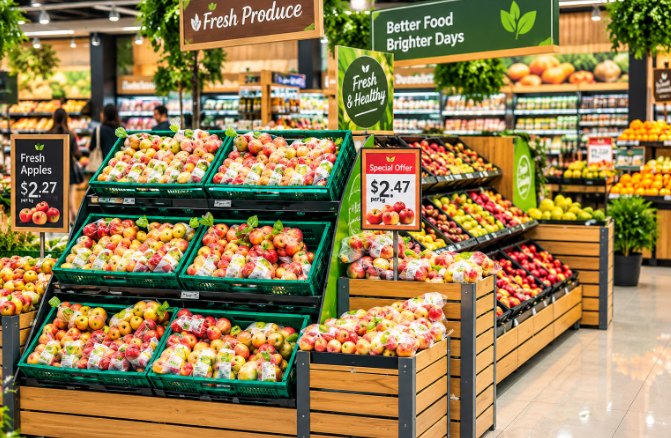

The weekly grocery run is quietly undergoing a major technological upgrade. For decades, the supermarket aisle has remained largely unchanged: static cardboard displays, paper price tags tucked into plastic strips, and bright promotional stickers competing for shopper attention.
Today, physical grocery spaces are embracing connected digital interfaces. By replacing traditional printed shelf markers with smart visual displays, grocery chains are making everyday shopping faster, more transparent, and far more intuitive.
The Evolution of Brick-and-Mortar Grocery: Beyond Static Shelves
The Frustration of Mismatched Shelf-to-Register Pricing
Few retail experiences are as universally frustrating as discovering a price discrepancy at the checkout counter. A customer selects an item marked with a promotional discount on the shelf, only to find the central register scanning the full original price.
This friction stems directly from the limitations of legacy paper tags:
- Store associates cannot manually replace thousands of paper cards fast enough to match rapid promotional shifts.
- Overlooked tags lead to price disputes and checkout delays that test consumer patience.
- Pricing mismatches force cashiers to perform manual overrides, creating long checkout lines.
- Inconsistent pricing damages consumer trust during an era where price transparency is paramount.
Consumer Expectations in the Omnichannel Era
Modern consumers navigate retail with smartphones in hand, cross-checking product ratings, comparing competitor prices, and browsing delivery apps while walking physical aisles. When a physical store fails to reflect the agility of its digital app, customers notice the disconnect immediately.
To bridge this divide, forward-thinking grocers are reimagining their store shelves:
- In-store pricing mirrors online promotional events in real time.
- The shelf displays updates dynamically to reflect flash sales and loyalty member discounts.
- Clear visual displays assure shoppers that they are receiving the best verified price across all shopping channels.
How Electronic Paper Displays Create Interactive Aisles
Modern smart aisles depend on high-visibility, bi-stable display hardware that mimics natural printed ink while communicating wirelessly with central inventory systems. Industry manufacturers such as Zhsunyco produce full-scale digital labeling solutions—ranging from compact electronic paper tags to centralized wireless access stations—designed to reflect live product data, nutritional information, and localized promotions directly at the shelf edge.
These edge devices turn static shelving into responsive visual nodes connected to the wider retail cloud.
The Technology Behind Crisp, Zero-Glare Digital Paper
Unlike smartphone screens or television monitors that emit bright backlight and strain the eyes, digital shelf labels utilize electronic ink technology. These screens feature micro-capsules containing charged black, white, and red pigments that move to the surface when activated by an electric charge.
This physical mechanism delivers an exceptional reading experience:
- The display reflects ambient store light naturally, completely eliminating screen glare under bright supermarket spotlights.
- Shoppers can read prices, unit measurements, and promotional notes clearly from wide viewing angles.
- The screen consumes battery power exclusively when changing image content, allowing displays to run for years on tiny coin cells.
Connecting Physical Shelves to Central Cloud Platforms
Behind each display screen sits a dedicated wireless network operating within the store. Industrial base station hubs mounted discreetly on ceiling grids act as the central nervous system of the building.
When store managers update a product category or activate a seasonal sale, the central cloud platform pushes commands through wireless access points. In seconds, thousands of shelf tags refresh simultaneously across every aisle without requiring human intervention.
Combating Food Waste and Perishable Shrinkage
Automated Expiration-Date Markdown Strategies
One of the most meaningful benefits of connected shelf displays is their ability to curtail commercial food waste. Perishable grocery categories—such as artisanal bread, pre-cut fruit, dairy, and ready-to-eat deli meals—often end up in store dumpsters simply because manual discounting occurs too late in the trading day.
Automated digital pricing enables timely, progressive discounts:
- Morning discounts gently reduce prices on items approaching their sell-by date to attract early-bird shoppers.
- Afternoon automated markdowns encourage home cooks and evening commuters to pick up short-dated ingredients.
- Dynamic discounts help grocery stores clear seasonal produce while offering budget-conscious shoppers substantial savings.
Sustainable Store Operations: Eradicating Single-Use Paper Signs
Beyond preventing food waste, digital shelf infrastructure removes massive amounts of physical trash from the retail supply chain. A single high-volume supermarket regularly discards tens of thousands of printed labels, plastic sleeves, and sticky adhesive backings every year.
Going paperless at the shelf edge delivers direct environmental benefits:
- Eliminates the continuous disposal of bleached paper stock and toxic chemical printer ribbons.
- Prevents worn plastic shelf strips and disposable shelf talkers from entering municipal landfills.
- Lowers the carbon footprint associated with shipping and transporting paper consumables to store locations.
Elevating Customer Convenience: From QR Codes to Visual Indicators
On-Demand Allergen and Nutritional Lookups
Modern shelf displays communicate far more than basic numbers and currency symbols. By pairing high-contrast digital paper with scannable QR codes, grocers transform the shelf edge into a comprehensive product encyclopedia.
Shoppers can scan tags with their smartphones to instantly view:
- Verified ingredient lists and clear warnings for common food allergens like gluten, dairy, or nuts.
- Detailed nutritional facts, calorie counts, and dietary certifications such as organic, vegan, or kosher.
- Direct customer reviews, culinary preparation suggestions, and farm-to-shelf traceability data.
In-Store Navigation and Accelerated Order Assembly
Modern digital tags integrate high-visibility, multi-color LED lights designed to simplify store operations and customer navigation. When activated by store software, these bright indicators pulse in distinct colors to guide human traffic directly to specific items.
This visual guidance streamlines complex store tasks:
- Instant-delivery pickers and click-and-collect staff follow flashing lights to locate hard-to-find items in seconds.
- Evening restocking associates locate designated shelf slots instantly, speeding up restocking routines.
- Retailers can activate visual cues to help shoppers locate hard-to-find specialty or seasonal ingredients.
The Outlook for Smart In-Store Environments
Merging Augmented Reality with Physical Shelf Displays
The evolution of physical shopping is moving toward a blend of physical merchandise and augmented reality (AR). In future store layouts, shoppers equipped with AR glasses or mobile camera apps will interact with digital shelf tags seamlessly.
As customers glance down an aisle, augmented interfaces will highlight dietary matches, personal discounts, and recipe combinations anchored directly to smart shelf coordinates. Physical store aisles will adapt dynamically to personal preferences.
Building Trust Through Transparent, Real-Time Merchandising
Ultimately, digital shelf displays transform supermarkets from static product warehouses into responsive, communicative environments. When customers know shelf prices always match the checkout register, price transparency becomes a cornerstone of customer loyalty.
Physical grocery and retail are rapidly shifting toward responsive digital ecosystems that bridge the gap between online convenience and tactile store visits. According to technical documentation on the evolution of the electronic shelf label, replacing legacy paper cards with connected visual nodes establishes the critical foundation needed for real-time retail media, automated stock alerts, and personalized customer interactions. As this technology spreads across global retail chains, the simple act of grocery shopping becomes faster, greener, and far more connected.