
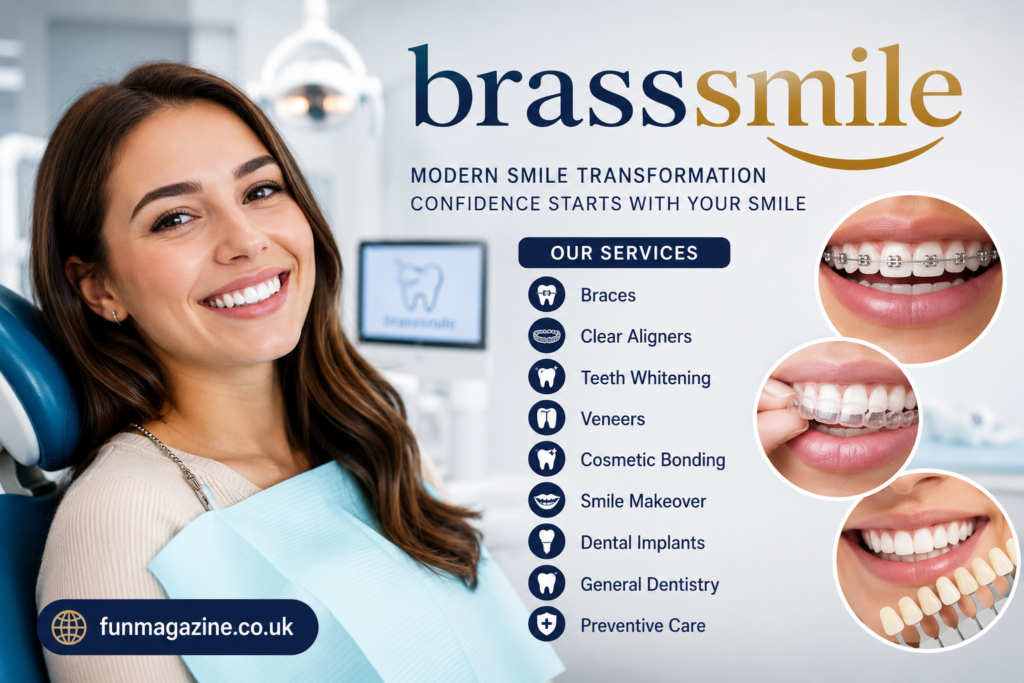

BrassSmile can be understood as a modern dental care concept that focuses on complete oral wellness. Instead of treating dental issues one by one in isolation, it leans toward a more connected approach.
In practical terms, it represents services that combine:
- Preventive dental care
- Cosmetic smile enhancement
- Restorative treatments
- Long-term oral maintenance
What makes this approach stand out is the shift in mindset. It’s not only about “fixing teeth when something goes wrong.” It’s about maintaining oral health so problems are less likely to happen in the first place.
And yes, that sounds simple—but in dentistry, that shift is actually a big deal.
The Idea Behind Modern Smile Care
Here’s the thing: people don’t just want healthy teeth anymore. They want confidence. They want a smile that feels natural in photos, meetings, conversations, and everyday life.
Modern dental brands like BrassSmile tap into that expectation.
Instead of treating dentistry as a purely clinical experience, they position it as something more personal. Something closer to self-care.
That means the experience often includes:
- More personalized treatment planning
- Aesthetic-focused consultations
- Preventive strategies tailored to the patient
- A mix of health and cosmetic goals
It’s dentistry, but with a stronger focus on how the patient actually feels about the result.
Services Commonly Associated with BrassSmile
While offerings can vary depending on location or clinic structure, dental care models like BrassSmile usually include a wide spectrum of services.
1. Preventive Dentistry
This is the foundation. Everything starts here.
Preventive care typically includes:
- Dental cleanings
- Routine checkups
- Oral hygiene guidance
- Early detection of cavities or gum issues
The goal is simple: stop problems before they start.
2. Cosmetic Dentistry
This is where the “smile improvement” aspect becomes more visible.
Cosmetic treatments often include:
- Teeth whitening
- Veneers
- Smile alignment corrections
- Contouring and reshaping
People usually seek these services when they want to improve appearance without major invasive procedures.
3. Restorative Treatments
Not every smile is perfect, and that’s normal. Restorative dentistry focuses on repair and function.
Common treatments include:
- Fillings
- Crowns
- Bridges
- Dental implants
These procedures restore strength and usability while keeping the smile natural-looking.
4. Advanced Dental Care Options
Modern clinics often go beyond basics by offering more advanced solutions like:
- Digital scanning for precision planning
- Laser-assisted treatments
- Minimally invasive procedures
- Orthodontic support (like aligners)
This is where technology starts playing a bigger role in patient comfort and accuracy.
Why Smile Health Matters More Than People Think
A smile isn’t just cosmetic. It’s deeply tied to overall health.
Poor oral health can lead to:
- Gum disease
- Tooth decay
- Bad breath
- Difficulty eating properly
- Even broader health complications in some cases
But beyond physical health, there’s also a psychological side.
People with dental issues often:
- Avoid smiling in public
- Feel less confident in conversations
- Experience social discomfort
That’s why modern dentistry focuses on both function and appearance. Because they’re connected more than most people realize.
The Patient Experience: What Makes It Different
One of the biggest shifts in modern dental care is how the patient experience is designed.
Instead of a rushed, purely clinical visit, the approach is more structured and supportive.
A typical experience may look like this:
- Initial consultation and oral assessment
- Discussion of concerns and goals
- Digital imaging or scans if needed
- Treatment planning with clear explanations
- Step-by-step care process
- Follow-up and maintenance planning
The idea is clarity. Patients know what’s happening, why it’s happening, and what results to expect.
That alone reduces a lot of anxiety people associate with dental visits.
Technology’s Role in Modern Dentistry
Dentistry has changed dramatically over the last decade. Tools that were once considered advanced are now becoming standard.
In modern systems like BrassSmile-style care, technology may include:
- Digital X-rays with lower radiation exposure
- 3D scanning for precise modeling
- Computer-aided treatment planning
- Improved materials for natural-looking restorations
What this really means is accuracy. Treatments are more predictable, faster, and often more comfortable.
And for patients, that translates into fewer surprises and smoother recovery.
Why People Are Moving Toward Smile-Focused Dentistry
There’s a noticeable trend in how people choose dental care today.
Instead of waiting for pain or emergencies, many now actively seek:
- Smile improvement
- Preventive maintenance
- Long-term dental planning
This shift is driven by a mix of lifestyle changes and awareness. Social media, professional environments, and even video calls have made people more conscious of their appearance.
But it’s not vanity. It’s confidence.
A healthy smile affects how people interact, communicate, and present themselves.
Who Can Benefit from This Approach?
The short answer: almost everyone.
But more specifically:
- People with stained or discolored teeth
- Individuals with minor alignment issues
- Anyone experiencing dental discomfort
- Those wanting long-term oral health planning
- People preparing for major life events (weddings, interviews, etc.)
The key idea is flexibility. It’s not one-size-fits-all dentistry.
Cost and Accessibility: What to Expect
Dental care costs vary widely depending on treatment type, location, and complexity.
Preventive care is generally more affordable, while cosmetic and restorative procedures can vary significantly based on materials and technology used.
What’s important to understand is this: delaying treatment often leads to higher costs later. A small issue today can turn into a larger, more expensive procedure tomorrow.
That’s why modern dental models focus heavily on early intervention.
Choosing the Right Dental Care Provider
If someone is considering a clinic or brand like BrassSmile, here are a few things worth paying attention to:
- Clear communication during consultation
- Transparent treatment planning
- Availability of preventive and cosmetic options
- Use of modern dental technology
- Strong patient reviews or reputation
A good dental provider doesn’t just treat teeth. They explain options in a way that actually makes sense.
The Future of Smile Care
Dentistry is heading toward something more integrated.
We’re likely to see:
- More AI-assisted diagnostics
- Faster, minimally invasive procedures
- Personalized treatment plans based on digital modeling
- Stronger focus on preventive care over reactive treatment
In other words, the gap between health care and cosmetic care will continue to shrink.
And brands like BrassSmile sit right in the middle of that shift.
Conclusion
At its core, BrassSmile represents more than a dental name. It reflects a broader change in how people think about oral health.
Not as something reactive. Not as something you deal with only when there’s pain. But as a continuous part of personal care and confidence.
A healthy smile doesn’t just sit on your face—it shapes how you show up in the world.
And that’s really the point of modern dental care.
FAQs
1. What is BrassSmile?
BrassSmile is associated with modern dental care focused on oral health, cosmetic improvement, and long-term smile maintenance.
2. Is BrassSmile a dental clinic or concept?
It is generally presented as a dental care brand or concept representing comprehensive smile-focused dentistry.
3. What services are included in modern smile care?
Typical services include preventive care, cosmetic treatments, restorative procedures, and advanced dental technology-based solutions.
4. Why is cosmetic dentistry becoming more popular?
Because people want confidence in their appearance, especially in social, professional, and digital environments.
5. Is preventive dental care important?
Yes. It helps detect issues early and reduces the need for complex treatments later.
Read also: Who is Ezra Samuel Reiser? Complete Guide