
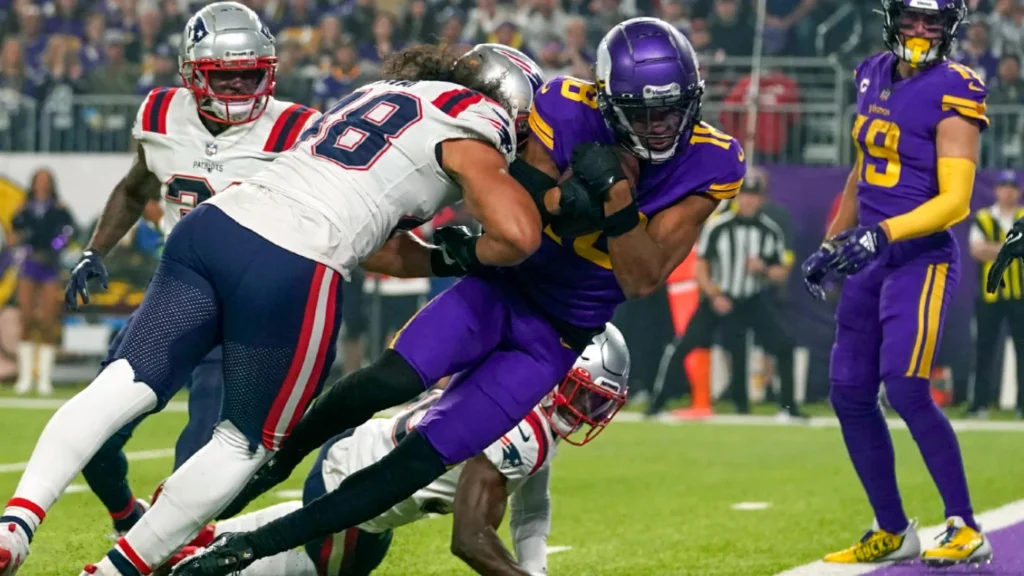

New England Patriots vs Minnesota Vikings Match Player Stats, The New England Patriots walked away with a 20–12 win, but the score doesn’t fully explain how the game unfolded. Minnesota moved the ball in stretches but struggled to finish drives. New England, on the other hand, leaned on efficiency and timely plays.
Here’s what stood out immediately:
- Patriots controlled possession for longer stretches
- Vikings struggled in red-zone execution
- Turnovers quietly shaped momentum
- Depth players made more impact than starters
That combination is often what decides preseason-style matchups or rotation-heavy NFL games.
New England Patriots Player Stats Breakdown
Quarterbacks: A rotation approach that actually worked
New England used multiple quarterbacks, and each had a slightly different role.
Joshua Dobbs
Dobbs was the most productive passer of the day.
- 11/16 passing
- 106 yards
- 1 touchdown
- 0 interceptions
What matters here isn’t just completion rate—it’s control. Dobbs didn’t force throws. He managed drives, kept the offense on schedule, and delivered the only passing touchdown for the team.
Ben Wooldridge
- 7/13
- 55 yards
- 0 touchdowns
Wooldridge played more of a stabilizing role. Short throws, safe decisions, and limited risk.
Drake Maye
- 4/7
- 46 yards
- 0 touchdowns
Maye’s appearance was brief but meaningful. The Patriots clearly wanted him to get reps without exposing him to heavy defensive pressure. Think of it as controlled development rather than a full evaluation.
Running Game: Quietly the Patriots’ strongest unit
If there was one area where New England looked consistently solid, it was the run game.
Key rushers:
- JaMycal Hasty: 11 carries, 47 yards
- TreVeyon Henderson: 4 carries, 20 yards, 1 TD
- Antonio Gibson: 7 carries, 17 yards
- Kevin Harris: rotational carries, short gains
What stands out is balance rather than explosiveness. No 50-yard breakaway runs—but steady movement, especially in short-yardage situations.
TreVeyon Henderson’s impact
His touchdown run mattered more than the stat line suggests. It came at a moment when Minnesota’s defense was starting to settle in. That score reset momentum.
Receiving Stats: Depth over dominance
New England didn’t rely on a single receiver. Instead, production was spread across the roster.
Key performance:
- Efton Chism III: 6 receptions, 71 yards, 1 TD
- Mack Hollins: chain-moving catches on key downs
- Multiple short-yard contributors across the depth chart
Why this matters
This kind of distribution tells you something important: the offense wasn’t built around one star receiver. It was structured around timing, spacing, and controlled passing concepts.
Chism’s touchdown was the standout moment. Not because it was flashy, but because it showed chemistry developing between backup quarterbacks and young receivers.
Patriots Defense: The quiet difference-maker
Defensive stats often get overlooked in summaries like this, but New England’s defense played a defining role.
- Forced 2 turnovers
- Limited big plays
- Controlled third-down conversions
Even without dominating the box score, they consistently forced Minnesota into uncomfortable situations. That’s where games are quietly won.
Minnesota Vikings Player Stats Breakdown
Quarterbacks: Pressure without payoff
Minnesota’s quarterback rotation showed movement, but not efficiency.
While full stat lines weren’t as heavily highlighted, the key takeaway is simple:
- Drives stalled in critical moments
- Red zone execution broke down
- Turnovers shifted field position
The Vikings moved the ball between the 20s, but finishing drives was the real problem.
Running Game: Inconsistent rhythm
The Vikings’ rushing attack struggled to build momentum.
- Short gains were common
- No consistent explosive plays
- Patriots defense won most early downs
When a run game can’t establish rhythm, it puts pressure on the passing game—and that’s exactly what happened here.
Receiving Unit: Limited impact plays
Minnesota’s receivers had moments of movement but lacked breakout performances.
- Short to medium completions
- No major explosive receiving yards
- Difficulty separating in key downs
This wasn’t a collapse—it was more of a “nothing clicked at the same time” performance.
Vikings Defense: Holding but not closing
The defense did enough to stay competitive:
- Limited deep threats
- Kept game relatively close
- But couldn’t stop key third-down conversions
The problem wasn’t total yardage—it was timing. When New England needed a first down, they often got it.
Key Match Stats That Defined the Game
Sometimes the simplest numbers tell the clearest story.
Total yards
- Patriots: 314
- Vikings: 273
Turnovers
- Patriots: 0
- Vikings: 2
Time of possession
- Patriots: 34:10
- Vikings: 25:50
What this really means
This wasn’t a blowout in yardage or athletic ability. It was a game of control.
New England:
- Protected the football
- Controlled tempo
- Converted opportunities
Minnesota:
- Gained yards but lost efficiency
- Gave away possession at the wrong time
Turning Points in the Match
1. Red zone failure by Minnesota
One or two stalled drives inside scoring range completely changed the tone.
2. Patriots touchdown efficiency
New England didn’t waste opportunities. When they reached scoring position, they finished drives.
3. Turnovers
Two turnovers don’t sound dramatic, but in a game like this, they’re everything.
What the player stats actually tell us
If you strip away names and just look at structure, a pattern appears:
- Patriots = balance + ball security + depth execution
- Vikings = yardage without conversion
That difference is subtle but decisive. Football isn’t just about moving the ball—it’s about finishing drives and protecting possession.
Tactical Takeaways
Here’s the thing—this game wasn’t about star power. It was about structure.
- New England trusted depth players and got production
- Minnesota had movement but lacked finishing
- Defense and turnovers defined momentum more than yardage
Games like this often don’t predict season outcomes, but they reveal something useful: how well a roster holds up beyond its starters.
Conclusion
When you strip the game down to numbers, the story becomes simple: New England didn’t need explosive performances to win. They just made fewer mistakes and executed better in key moments.
Minnesota had enough yardage to stay in it—but football rewards completion, not just progress.
And that’s really what the stat sheet tells you if you read it closely.
FAQs
1. Who was the top scorer in the game?
TreVeyon Henderson scored the key rushing touchdown for New England.
2. Who had the most passing yards?
Joshua Dobbs led the game with 106 passing yards.
3. Which team had more turnovers?
Minnesota Vikings committed 2 turnovers, while the Patriots had none.
4. Who was the best receiver?
Efton Chism III stood out with 6 catches, 71 yards, and a touchdown.
5. What was the final score?
The New England Patriots defeated the Minnesota Vikings 20–12.
Read also: Craimly The AI Writing Tool That’s Changing How Students Draft Essays