

The global infant care market is experiencing unprecedented growth, offering lucrative opportunities for emerging retail brands. However, scaling a baby product line carries exceptional risks compared to standard consumer goods. Juvenile products demand uncompromising safety standards and stringent quality control protocols.
A single manufacturing defect or compliance failure can result in catastrophic product recalls, irreversible brand damage, and severe legal liabilities. To successfully navigate this high-stakes landscape in 2026, modern brands must prioritize robust supply chain integration. Partnering with the right manufacturer is no longer just about cost reduction; it is the ultimate safeguard for brand equity.
The Strategic Advantage of Specialized OEM Partnerships
Modern baby brands are increasingly abandoning the idea of building their own private manufacturing facilities. Establishing a proprietary factory requires massive upfront capital, continuous regulatory audits, and highly burdensome operational overhead. By shifting to an integrated OEM/ODM model, brands can eliminate manufacturing bottlenecks entirely.
For growing brands, partnering with a specialized OEM provides an immediate competitive edge through established, integrated supply chains. Instead of managing multiple fragmented suppliers, businesses can leverage facilities that handle everything from raw material sourcing to rigorous in-house mechanical testing.
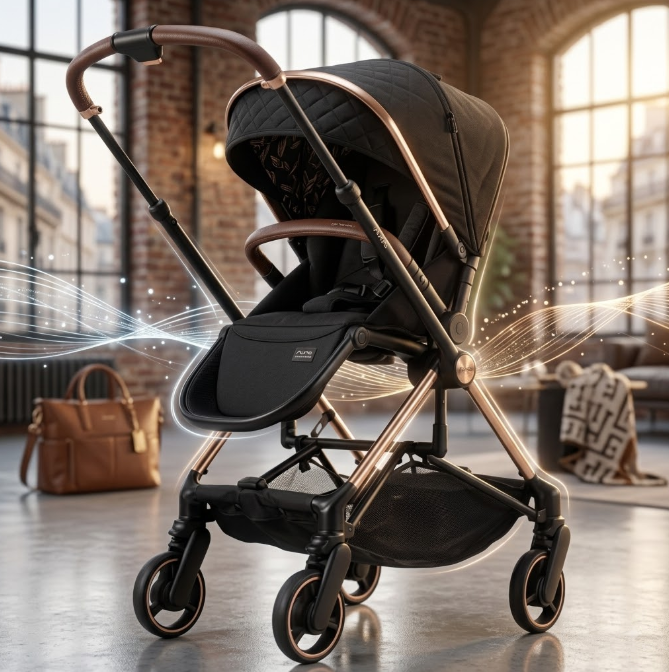
For instance, working with an experienced OEM baby product manufacturer like River Baby allows brands to tap into advanced quality control infrastructures. By utilizing centralized R&D and artificial road testing tracks for strollers, brands ensure that the final product exceeds baseline safety requirements before it even reaches the global market.
This strategic alignment drastically accelerates a brand’s time-to-market. It frees up internal resources, allowing leadership teams to focus exclusively on digital marketing, brand acquisition, and expanding global retail distribution.
Essential Material Testing and Safety Innovations
Heavy Metal Reduction and Fabric Safety
Infants are uniquely vulnerable to chemical exposure, making raw material selection the most critical phase of product development. Leading manufacturers now enforce zero-tolerance policies regarding toxic chemical residues in textiles and plastics.
Procurement teams must ensure that all seating fabrics, canopies, and bassinet linings utilize OEKO-TEX certified materials. Furthermore, strict laboratory spectrometry must be conducted on all structural plastics to verify the complete absence of heavy metals like lead and cadmium.
Physical Durability Testing
Beyond chemical safety, physical durability is paramount to preventing structural collapses during everyday parental use. High-end manufacturing facilities deploy sophisticated destructive testing laboratories to simulate years of intense physical strain.
A rigorous mechanical quality control program should consistently include:
- Over 10,000-cycle pushbar strength tests to ensure stroller frame integrity.
- Artificial road testing on treadmill-style machines equipped with cobblestone and gravel simulation.
- High-angle incline tests to verify the absolute holding force of all braking mechanisms.
By maintaining a strict AQL 1.5% standard during these rigorous quality control inspections, brands can confidently guarantee long-term mechanical reliability.
Streamlining Supply Chain and Production Lead Times
In the highly competitive e-commerce sector, inventory stockouts during peak holiday seasons can devastate a brand’s annual revenue. Working with an advanced manufacturer that possesses a robust, pre-vetted raw material network provides incredible agility.
Top-tier factories heavily utilize automated production lines for metal tube cutting, welding, and injection molding. This industrial automation minimizes human error, standardizes output, and can speed up overall delivery by 20% compared to industry averages.
Predictable production lead times allow brand owners to optimize their international freight logistics. This ensures that massive container shipments arrive at regional fulfillment centers exactly when consumer demand peaks.
Navigating International Regulatory Certifications
Before launching any children’s product, brands must verify that their entire supply chain complies with the specific regional regulations of their target market. Failing to meet these rigorous guidelines can result in catastrophic product recalls and legal penalties.
In the United States, for example, manufacturers and importers must strictly adhere to the safety mandates outlined by the Consumer Product Safety Commission (CPSC), which governs everything from phthalate limits in plastics to the structural integrity of cribs and high chairs.
Similarly, achieving strict REACH compliance is an absolute legal prerequisite for entering the European Union. This framework guarantees that all chemical substances utilized throughout the manufacturing process are entirely safe for consumer exposure.
Conclusion
Scaling a baby gear brand in today’s highly regulated market requires far more than just innovative aesthetics. A reliable manufacturing partner is fundamentally an investment in brand safety, risk mitigation, and long-term scalability. By leveraging specialized OEM supply chains, brands can confidently deliver superior, globally certified products to modern parents.